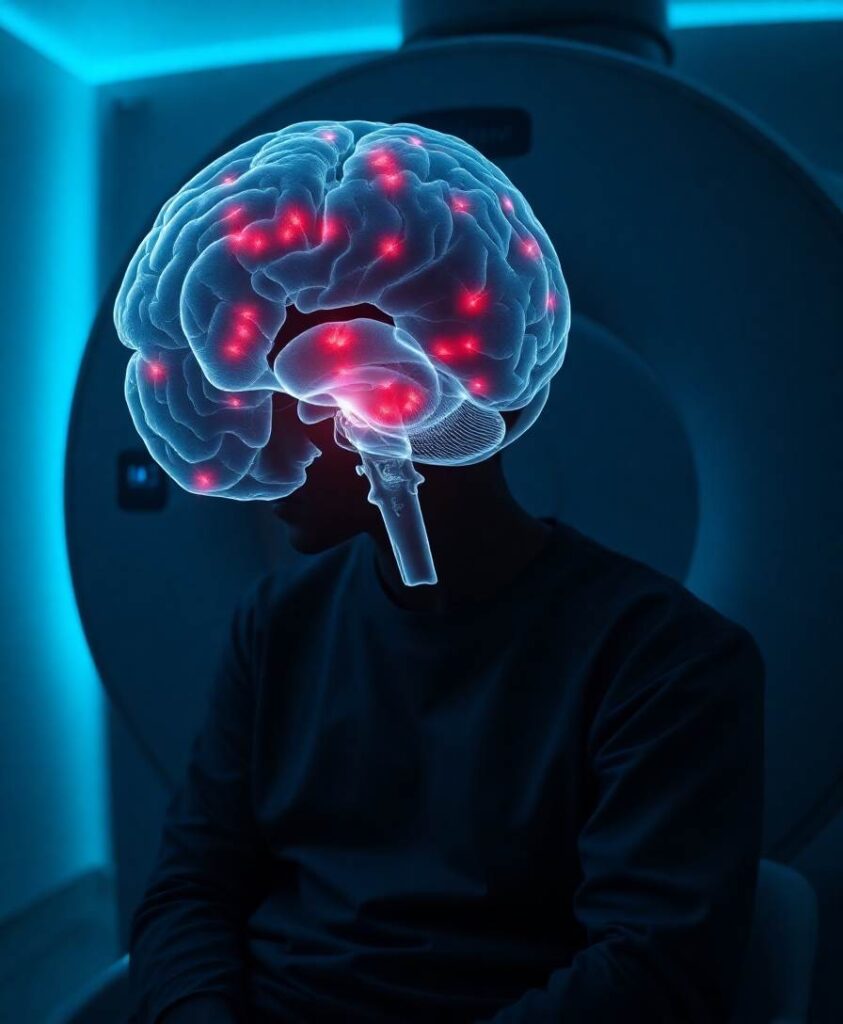

Neuroscience offers clues about how map-like representations become flexible mental content. Brain rhythms and replay events appear to convert spatially organized maps into sequences of neural activity that can be shared with cortical areas that use words and rules. Those dynamic processes could let a single map serve multiple purposes, supporting planning, memory, and abstract inference without forcing everything into sentence-like propositions. This suggests a layered architecture in which spatial formats and symbolic formats interoperate.
For anyone curious about human thought, this perspective reframes cognitive maps as more than navigation aids; they are a candidate medium for complex cognition that may broaden how people reason and learn. Follow the link to see how map-based codes, neural dynamics, and symbolic systems might combine to expand our capacity for planning, creativity, and inclusive tools that amplify human potential.
Cognitive maps are essential for navigation, but to what extent are they involved in thinking more broadly? In this opinion article, we examine whether cognitive maps constitute a genuine vehicle for thought and how they relate to the notion of a language of thought. Integrating work from philosophy, psychology, and neuroscience, we suggest that map-like representations offer a distinct, flexible medium for encoding information and exhibit compositionality in both spatial and nonspatial domains. We then consider how dynamic neural mechanisms—replay, theta sequences, and vector computation—may transform map-based representations into sequential routelike formats that interface with cortical systems supporting propositional thinking. Cognitive maps may be complementary to symbolic cognition, jointly enabling flexible human reasoning.