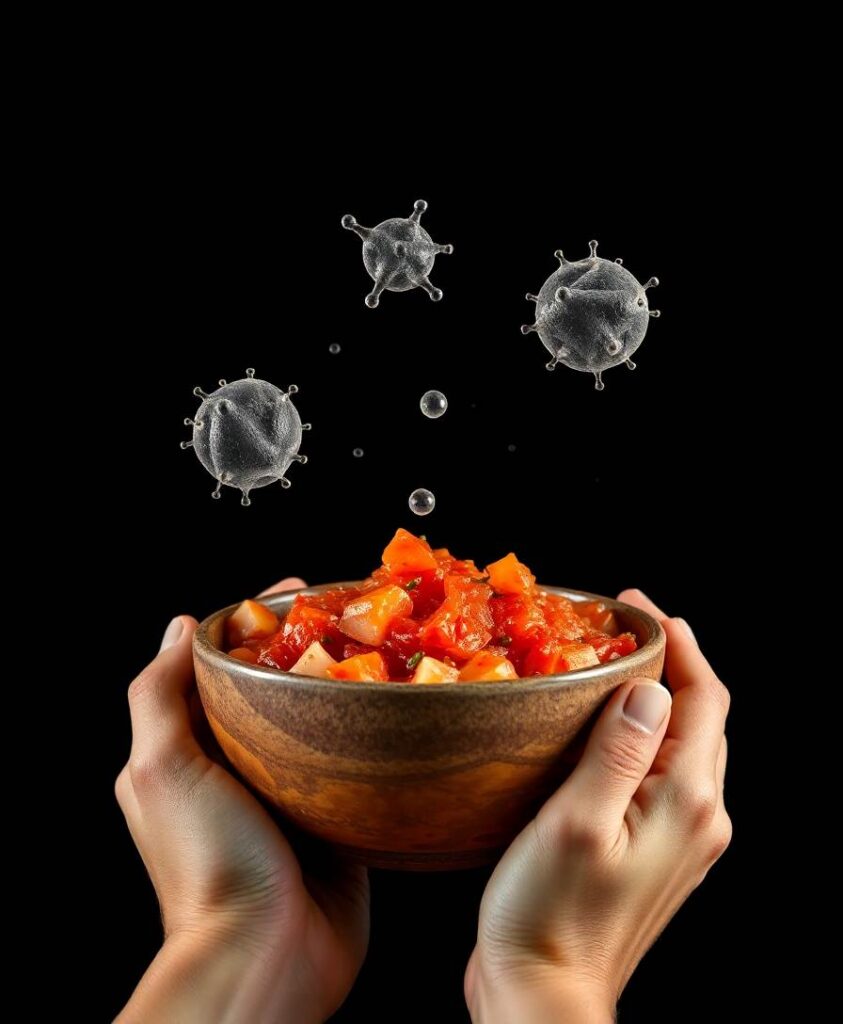
Researchers looked at a bacterium commonly found in kimchi and tested how it interacts with nanoplastics under conditions that mimic the gut. In lab experiments and in mice, the microbe clung to plastic fragments and increased the amount recovered in feces. If future studies confirm similar effects in humans, fermented foods or targeted probiotics could become tools for lowering exposure to microscopic pollutants.

This line of work connects to how we think about human potential and health equity. Access to affordable, culturally familiar interventions matters when environmental risks are widespread. The study opens a practical avenue worth following, and it prompts new questions about safety, how different microbes behave, and whether diet can shape our exposure to emerging contaminants. Read the full article to see how these findings might reshape preventive health and broaden who benefits from cleaner biology.
A kimchi-derived bacterium can bind to nanoplastics under gut-like conditions and may help carry them out of the body. In mice, the probiotic more than doubled the amount of nanoplastics detected in feces, pointing to a surprising potential use for microbes from fermented foods.