For people curious about prevention and resilience, these connections suggest sleep patterns could become practical signals for early intervention or personalized habits. Measuring REM and deep sleep at scale is now possible with wearable devices, which creates opportunities to study how small changes in nightly patterns might ripple into decades of health. Experts will need to untangle cause from correlation, and to test whether shifting sleep architecture can meaningfully alter disease trajectories.
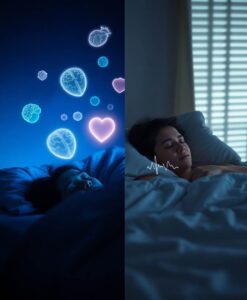
This line of work touches directly on human potential: better sleep might support mental clarity, physical stamina, and longer, healthier lives. The full article explores the methods and conditions involved, and it raises questions about who benefits from sleep-focused strategies, how to make those strategies equitable, and what comes next for translating sleep science into real-world care.
A large study tracking more than 95,000 people suggests that how you sleep may be linked to your risk of developing dozens of diseases. People who spent more time in REM sleep had lower risks of 83 conditions, including dementia, heart failure, and Parkinson’s disease, while more deep sleep was associated with lower risks of conditions such as type 2 diabetes and major depression.