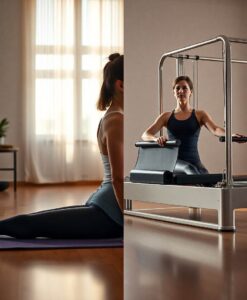

For someone thinking about progress or accessibility, the differences matter more than surface-level labels. A mat routine can be surprisingly demanding in balance and core coordination, while a reformer can help people access movements they might not manage on the floor. Teachers adapt both formats to meet mobility limits, injury history, or goals like boosting athletic performance or easing chronic back pain. Equipment doesn’t guarantee outcomes; the way exercises are cued, scaled, and sequenced makes the real difference in long-term gains and safety.
If you care about movement that supports daily life and learning, the choice between mat and reformer becomes a doorway into how you want to grow. Curious about which approach fits your body, schedule, or rehabilitation needs? The full article explores practical trade-offs, real-world examples, and coaching tips that connect Pilates practice to resilience, independence, and inclusive access to fitness.
The benefits of Pilates are numerous, but many people are unsure whether doing mat Pilates or exercising with a Pilates reformer is the best choice fo…