Thinking in terms of umwelt—the subjective world each organism experiences—shifts the focus from searching for a single, universal representation to mapping the ways representations vary and why. When animals, people, and ANNs face similar tasks and constraints, their solutions can overlap. When those constraints diverge, so do their internal models. This perspective explains why alignment appears in some settings but breaks down in others, and it encourages experiments that probe which ecological factors drive representational similarity or difference.
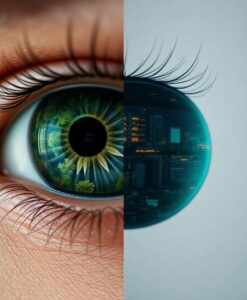
For anyone interested in human potential, design, or inclusion, this approach matters because it reframes model comparison as an exploration of diversity rather than a hunt for a single standard. That change in stance opens new questions: which environments produce representations that amplify strengths across populations, which produce blind spots, and how might we design systems that respect varied umwelten? Follow the full article to see how these ideas reshape our assumptions about learning, generalization, and the future of intelligent systems.
Recent studies reveal striking representational alignment between artificial neural networks (ANNs) and biological brains, leading to proposals that all sufficiently capable systems converge on universal representations of reality. We argue that this claim of Universality is premature. We introduce the Umwelt Representation Hypothesis, which proposes that alignment arises not from convergence toward a single global optimum but from overlap in the ecological constraints under which systems develop. We review empirical evidence showing that representational differences between species, individuals, and ANNs are systematic and adaptive, which is difficult to reconcile with Universality. Finally, we reframe ANN model comparison as a method for mapping clusters of alignment in the ecological constraint space rather than as a search for a single optimal world model.