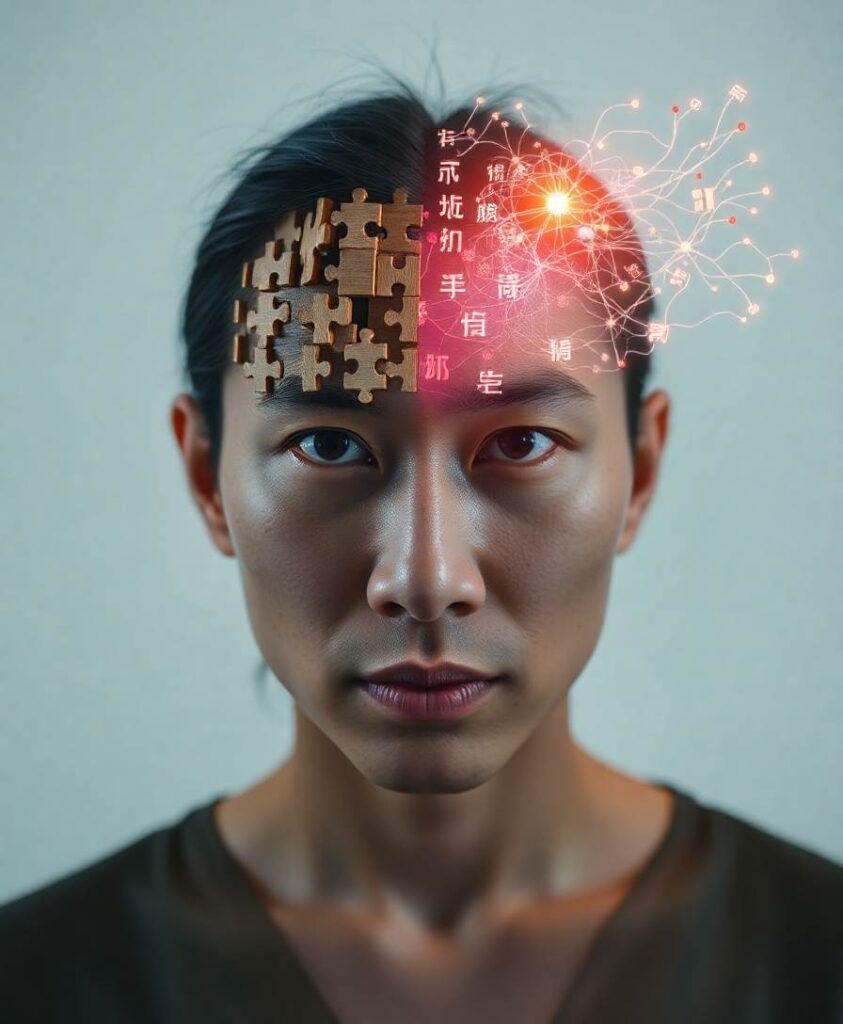

The team compares patterns across two very different languages to find common signals of individuation—features that mark something as a distinct entity in either space or time. Finding similar patterns across English and Mandarin would suggest that people share a mental toolkit for separating countable individuals from uncountable material, and bounded happenings from extended processes. That kind of shared mental architecture would help explain why humans worldwide develop comparable ways to talk about objects, actions, and change.
Follow the link to read the article and see how the evidence connects to human potential. Understanding these deep organizing principles helps educators craft clearer lessons, helps technologists build more natural language systems, and helps communicators include people whose languages encode the world differently. The paper raises questions about how universal cognitive habits support learning and inclusion—worth exploring for anyone curious about how language shapes thought.
Abstract
Entities in both the spatial and the temporal domains are characterized by a shared notion of individuation. Within the spatial domain, objects (e.g., table, ball) are discrete, countable mental individuals, and are distinct from unindividuated substances (e.g., sand, water). Within the temporal domain, bounded events (e.g., pile up a deck of cards) are mental individuals: They are internally structured in terms of distinct temporal stages and a well-defined endpoint; as such, they differ from unbounded events (e.g., shuffle a deck of cards) that lack such features. A key question left open by previous studies (conducted with English speakers) is whether the principles of mental individuation across the spatial and temporal domains are universal or shaped by one’s native language. Here, we address this issue by comparing English and Mandarin speakers. Our results highlight shared signatures of individuation that underpin object–event correspondences across languages and are potentially universal.