

Thinking about pupil changes as the product of multiple mechanisms shifts how experiments are designed and how data are interpreted. Optical effects alter the image hitting the retina; the visual system uses pupil adjustments to keep perceived brightness stable; and movements we make influence what we see next. Each of these processes interacts with neural activity and behavior, so pupil size becomes part of a loop rather than a passive readout. That idea opens new ways to probe attention, sensory processing, and individual differences in real-world settings.
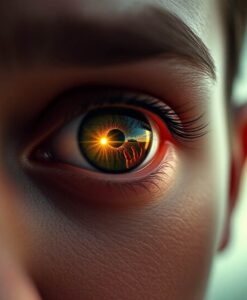
If you want to understand how small changes in the eye shape what we perceive and how we act, this article maps a broader conceptual landscape. The framework connects basic physiology to practical questions about measurement and interpretation, and it points toward experiments that could reveal how pupil dynamics contribute to learning, accessibility, and human potential. Follow the full article to explore those experimental paths and the surprising implications for vision and behavior.
Spontaneous fluctuations in pupil size are correlated with neural activity and behavior in many ways. This is generally attributed to a single underlying cause: arousal. This unitary account disregards other potential underlying causes. To address this gap, we propose a comprehensive framework of four mechanisms that jointly underlie the complex and context-dependent relationships between spontaneous pupil-size fluctuations, neural activity, and behavior. In addition to arousal, we consider optical effects, brightness constancy, and self-generated visual stimulation. Based on this framework, we argue that pupil fluctuations should be considered beyond arousal, as a functionally important, yet still poorly understood, component of visual processing.