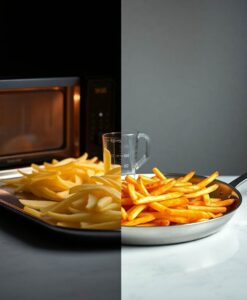
The idea taps into thermal physics and food chemistry. Microwaves drive moisture out from the inside while limiting surface oil uptake, and a short finish in hot oil builds the browning and crunch that define a great fry. If this approach scales from lab to home ovens or restaurant kitchens, it could lower the amount of absorbed fat without sacrificing the sensory cues—sound, color, and bite—that make fried foods satisfying. That combination could influence how chefs, manufacturers, and home cooks rethink frying.
For readers curious about human health and culinary innovation, this research links daily food choices to larger goals: promoting healthier eating patterns and expanding access to tastier, lower-fat options. The next steps will test real-world workflows, ingredient varieties, and long-term effects on taste and texture. Follow the study to see how a simple tweak in heat delivery might reshape a common comfort food and the ways we think about healthy cooking.
A new cooking method could make French fries crispier in less time while significantly limiting how much oil they absorb. Researchers propose combining microwave heating, which keeps oil out, with conventional frying, which provides the crunch consumers expect.