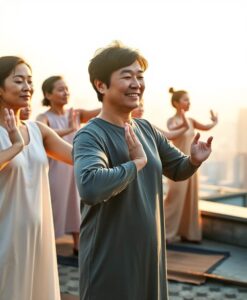

Clinical research now brings solid evidence to a tradition many have relied on anecdotally. Adults with mild hypertension who learned and practiced these routines experienced sustained reductions in blood pressure across several months. The study’s scale and follow-up make the findings relevant to public health conversations about accessible, nonpharmacological ways to support cardiovascular health.
If you care about practical tools that expand who can participate in health-promoting activity, this line of work matters. The idea that movement, breath, and attention can combine to shift a core risk factor for heart disease raises questions about how we design everyday routines, clinics, and community programs. Click through to see how the study was done and how these exercises might fit into a broader plan for resilience, inclusion, and long-term well-being.
An ancient Chinese exercise routine may be just as powerful as a daily brisk walk for lowering blood pressure — without equipment, gyms, or intense workouts. In a major clinical trial, adults with stage 1 hypertension who practiced baduanjin, a gentle mind-body exercise combining slow movements, breathing, and meditation, saw meaningful drops in blood pressure within three months that lasted for an entire year.