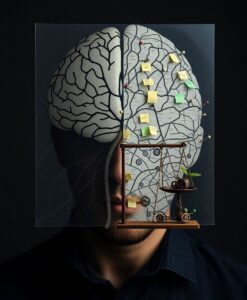

This way of thinking changes how we interpret differences in psychiatric and neurological conditions. Variations in connectivity are not simply errors moving someone away from an ideal blueprint. They are alternate settings in a multidimensional trade-off space. The same pattern that helps one person excel at a task could make another vulnerable in a different context. Viewing atypical trajectories as reweighted compromises opens clearer paths for personalized interventions and fairer diagnostic frameworks.
The argument also matters for brain-inspired AI. Copying the brain’s exact wiring risks inheriting trade-offs that were useful for biological survival but unhelpful for engineered systems. Instead, designers should map the underlying objectives that brains balance and choose which to prioritize for a specific purpose. That perspective both deepens our understanding of human potential and points to new ways to build inclusive technologies that amplify strengths while minimizing harmful compromises.
Human brain architecture is guiding brain-inspired artificial intelligence (AI) and has been treated as an optimal template, whose deviations could mark different psychiatric and neurological conditions. We argue this premise is wrong: under any single goal (e.g., minimal wiring cost or maximal communication efficiency), the human connectome is suboptimal. Instead, its organization reflects multi-objective trade-offs navigated over evolution and development under biological and environmental constraints. For psychopathology, atypical trajectories are not distances from an ideal brain but reweighted compromises in the same trade-off space. For neuro-AI, directly duplicating the brain’s connectivity risks copying its irrelevant compromises. Treating brains and models as products of multi-objective optimization and co-tuning relevant objectives offers a more powerful framework for interpreting clinical phenotypes and designing next-generation AI.