Studies link restrained but mindful intake to lower overall calorie consumption, improved metabolic markers, and steadier weight across adulthood. Those effects matter because long-term health is shaped by habits repeated every day rather than by occasional strict diets. Paying attention to portions and to the sensory experience of food helps people build a sustainable routine that fits real life, not an all-or-nothing plan.
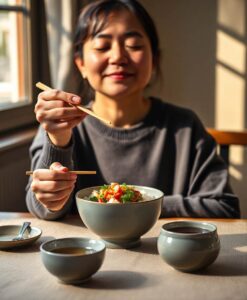
Curious how this habit fits into modern routines and what evidence supports its benefits? The article explores how simple changes in timing, attention, and portioning can affect longevity, energy, and even social aspects of meals. Click through to see how hara hachi bu can be adapted to different cultures and lifestyles and what it might mean for making healthy choices more inclusive and lasting.
Hara hachi bu, a traditional Japanese practice of eating until you’re about 80% full, is gaining attention as a simple yet powerful way to improve health and reshape our relationship with food. Rather than promoting strict dieting, it encourages slowing down, tuning into hunger cues, and eating with awareness and gratitude. Research suggests it may help reduce calorie intake, support healthier food choices, and prevent long-term weight gain.