

This view draws on experiments with infants, field studies across different cultures, and computational models that mimic how brains track movement and landmarks. If geometry rides on navigation systems, language and cultural practices act as tools that unlock and transform those raw spatial abilities into the precise, symbolic forms we teach in classrooms. That shift helps explain how people can learn abstract geometry while still relying on embodied experiences of moving through the world.
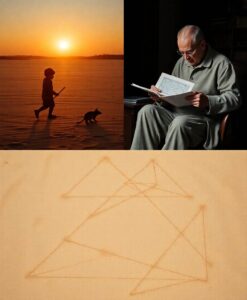
For readers curious about human potential, this approach opens new questions about teaching, accessibility, and cross-cultural differences in mathematical learning. It nudges researchers to look beyond specialized modules and to explore how ordinary perceptual systems scale into formal knowledge. Follow the link to see how these ideas could change what we expect from education, cognitive science, and the shared roots of thinking across species.
Geometry is often considered the paradigmatic model of abstract thought, with thinkers since at least Plato exploring its origins. A dominant hypothesis posits that a specialized, modular language of thought underpins our species’ unique geometric abilities. Challenging this view, I propose the Wanderers Hypothesis for Geometry, which suggests that human geometry is primarily rooted in navigation-like mental processes shared by humans and nonhuman animals and that these processes approximate Euclidean geometry. Drawing on infant studies, cross-cultural experiments, and cognitive modeling, I argue that humans access these primitive processes through natural language, enabling flexible application and supporting our capacity for formal learning. This perspective broadens our understanding of geometric cognition and the nature of the human mind.