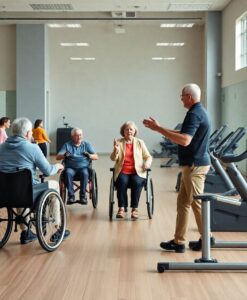

How staff act matters as much as the built environment. Clear communication, patient demonstrations, and willingness to adapt routines create a culture where members feel seen and supported. Training front-desk teams and instructors to ask simple questions and offer choices makes participation easier and more empowering for people with mobility, sensory, or cognitive differences.
Accessibility also shapes who feels able to grow through fitness over time, and that has ripple effects for health and community inclusion. Learning how modest investments and new habits change daily experiences opens possibilities for better retention, stronger social ties, and wider access to wellbeing. Read the full article to explore specific steps that organizations can take to turn intention into practice and welcome more people into active, healthy lives.
Making fitness spaces accessible is about both the physical space and the attitude of the staff members. This blog offers five key steps to improving …