This narrowing matters because how someone is imagined affects opportunities and inclusion. If women are mentally filed under a small set of characteristics, subtle decisions—like who gets mentorship or who’s asked to lead a project—can favor those who fit the mental model. Men, by contrast, can be imagined into many roles, including those associated with warmth or care, which gives them more flexibility in social and professional settings. Over time, these patterns influence who advances and whose potential gets noticed.
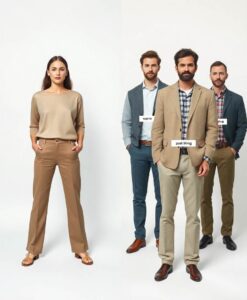
The study behind this article invites a closer look at everyday contexts where gender labels aren’t pronounced, such as casual conversations, observational hiring, or classroom dynamics. That quiet framing may be where biases operate most powerfully. Exploring how representation varies by context could reveal practical ways to broaden whose attributes we notice and reward, with real consequences for equity, growth, and human potential.
People seem to represent men and women in a conceptually balanced manner: for example, seeing women as warm (not agentic) and men as agentic (not warm). Emerging evidence, however, suggests people might represent them as imbalanced: women as one thing and men as many things. We argue that people describe men and women as balanced, symmetrical opposites when thinking of them in terms of their gender category—a gender framing often evoked by common methods. However, in the absence of this framing (e.g., in naturalistic contexts), women stand out as a gender category more than men, creating conceptual imbalance. In these contexts, people represent women more narrowly while affording men a wider array of attributes—even attributes traditionally linked to women (e.g., warmth).