

Recent work shows that saccade decisions—the moments your eyes jump to the next word—are made when the brain has reached an intermediate stage of lexical processing. After that choice is set in motion, the brain continues to complete recognition and context integration. This helps explain a puzzling observation: eyes often move ahead faster than full comprehension, yet comprehension still happens because some processing continues after the eyes have shifted.
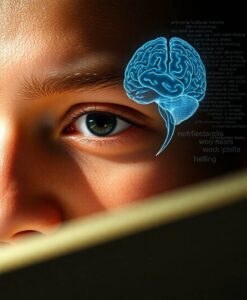
For readers, educators, and technologists, this perspective shifts where to look for improvements in reading support and assessment. It invites questions about how attention, prior knowledge, and text design influence the timing of decisions and the quality of integration that follows. Follow the full article to see how these linked neural and behavioral rhythms reshape ideas about speed, understanding, and inclusive reading practices.
Co-registration of neural and behavioral measures is key in developing a holistic understanding of reading. However, researchers must study not only neural effects inside fixations, early enough to initiate saccade decisions, but also later effects that are linguistically driven. Furthermore, researchers must not only use co-registration to allow for naturalistic reading but also to look beyond individual fixations to examine the coupling between temporally extended neural language processing and saccade decisions. Such an approach has revealed that saccade decisions are triggered at an intermediate point of lexical processing, followed by complete recognition and integration of a word into its context. This account can resolve the apparent paradox that the eyes can move through text faster than the brain understands it.