Simulated experience uses vivid scenarios, interactive tools, and imagined sequences to bring those overlooked features into view. Designed well, these simulations reveal what daily life feels like during a hazard, how long recovery takes, and which trade-offs matter most. That makes uncertainty feel tangible instead of abstract, so learners can test options and notice which consequences actually matter to them.
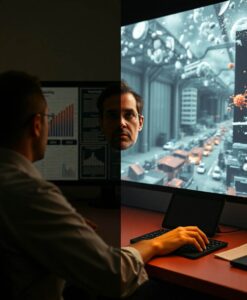
For anyone interested in human potential, this approach matters because clearer risk understanding changes behavior, access to resources, and inclusion in planning. The article outlines ideas that could reshape public health, climate adaptation, and consumer safety. Click through to explore how experiments and prototypes could make risk communication more humane and useful for people from many backgrounds.
Traditional risk communication emphasizes the probability of possible outcomes but neglects other crucial dimensions of risks. We propose a taxonomy of risk information and illustrate how simulated experience can convey overlooked aspects. We conclude with a research agenda to advance the theory and practice of risk communication across domains.