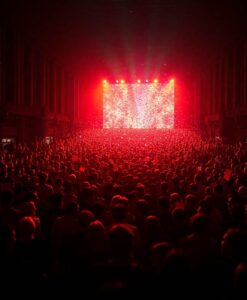
This effect tells us something about the mental rules the brain uses to represent number. Instead of treating each item independently, the visual system appears to encode groups relative to the whole set of possible locations. That means empty positions pull perception one way and filled positions pull it the other, producing a reliable illusion even when observers know it’s happening. The finding connects to broader ideas about part–whole representations in cognition and suggests everyday judgments of quantity are shaped by layout and proportion, not just raw count.
For anyone curious about how perception intersects with decision-making, learning, and design, these results matter. They help explain why crowd estimates, classroom counts, or interface displays can mislead us, and they point to ways to design visuals that support accurate judgments. Follow the link to read the full study and explore how a subtle framing of space changes what we think we see, with implications for fairness, accessibility, and how we teach number to learners of different ages.
Abstract
When we investigate busy visual scenes, how do we estimate the number of objects that we see? Most work on number perception answers this question by focusing on properties of the to-be-estimated set of objects—their number, their size, their relative position, and so on. Here, in contrast, we show that perceived number is influenced by extraneous visual information. In six experiments, participants were shown “crowds” of dots that filled “seats” in a visual grid, asking whether the perceived number is influenced not only by the number of occupied seats, but also the number of unoccupied seats. When only about 15%–30% of the “seats” were filled, people perceived fewer dots (compared to displays without any grid). We further demonstrated that this illusion depends on the proportion of occupied seats. When most “seats” were filled, the illusion reversed: People perceived the grid displays as having more dots. This effect is continuous, switching directions at around the 50% occupancy mark. Moreover, this “crowd size illusion” is phenomenologically robust: It is evident in simple visual displays, even when the observer is aware they are being tricked. We discuss these findings in light of the recent hypothesis that the number system represents number in a part–whole format.