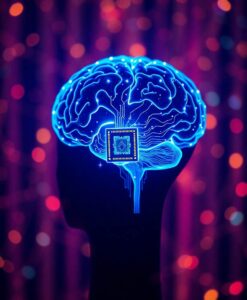
For people living with epilepsy, paralysis, or vision loss, tools that translate brain signals into meaningful commands or feedback could change what daily life looks like. The combination of high-resolution sensing and on-board decoding models means researchers can explore movement, perception, and intent with finer time and spatial detail than before. That matters for designing therapies that restore function and for making assistive devices feel more natural.
There are scientific and ethical challenges ahead, including long-term safety, data privacy, and how to make these advances accessible beyond a handful of specialized centers. Still, the technical leap invites new lines of research into human potential and inclusion. Follow the full article to see how this chip links raw brain activity to actionable signals and what that might mean for widening who can participate more fully in work, learning, and daily life.
BISC is an ultra-thin neural implant that creates a high-bandwidth wireless link between the brain and computers. Its tiny single-chip design packs tens of thousands of electrodes and supports advanced AI models for decoding movement, perception, and intent. Initial clinical work shows it can be inserted through a small opening in the skull and remain stable while capturing detailed neural activity. The technology could reshape treatments for epilepsy, paralysis, and blindness.