Studying bumblebees sheds light on what cognitive abilities actually do for an animal. Experiments can reveal how a bee remembers rewarding flowers or alters foraging routes when conditions shift. Field studies show whether those lab-demonstrated skills translate to success in the wild, which tells us how cognition influences fitness and adaptation. This two-way approach sharpens our understanding of which mental traits are flexible tools and which are fixed strategies.
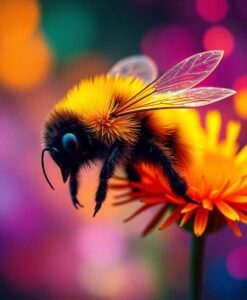
The implications reach beyond insects. Insights from bumblebees help explain how environments shape minds across species and how diversity in cognition supports resilience and inclusion within ecosystems. Follow the full article to explore how bridging laboratory precision with ecological realism opens new questions about learning, cooperation, and the limits of animal intelligence.
Bumblebees have been used to study various aspects of complex cognition and behavior, yet unlike many purely lab-based systems, we also possess rich knowledge of their natural history. We highlight how integrating these perspectives has provided insights into both the underlying mechanisms and functions of cognitive abilities.